
Exemplul 1
Ce scrii
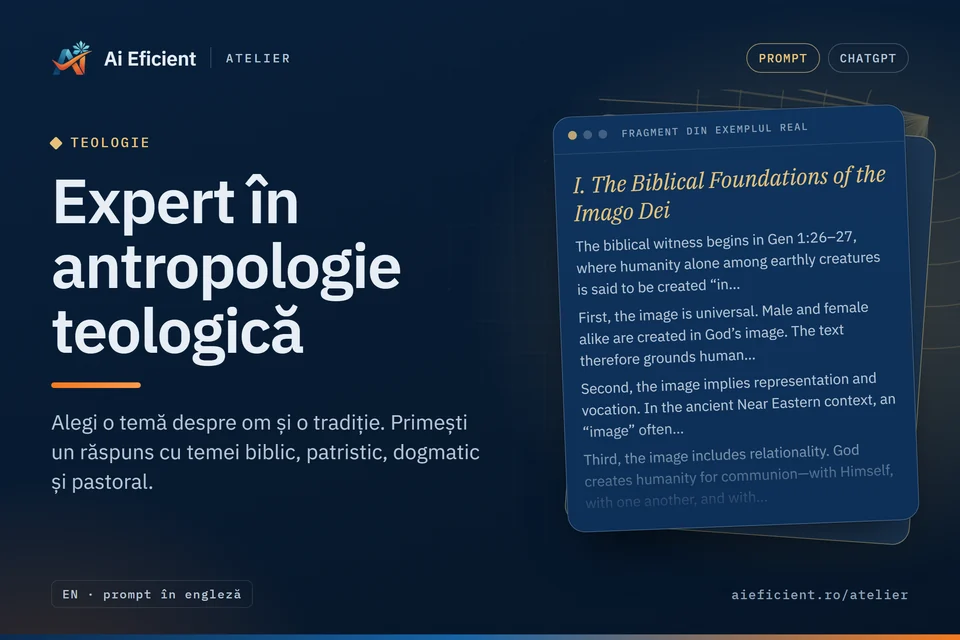
- Tema antropologică
- What does it mean that the human being is created in the image of God (imago Dei)?
- Tradiția teologică
- Eastern Orthodox (patristic)
- Sursele de accentuat
- patristic theology
- Cine citește
- undergraduate theology student
- Forma răspunsului
- a structured theological essay with an introduction, three argued sections, and a conclusion
Ce primești
Introduction
The doctrine of the imago Dei—the “image of God”—is the Christian teaching that the human being is created in a unique relation to God and therefore possesses an inherent dignity, vocation, and capacity for communion with Him. The phrase comes principally from Gen 1:26–27: “Let us make man in our image, after our likeness.” In theological anthropology, image (eikōn in Greek) refers to the God-given structure or orientation of human existence that reflects God analogically, while likeness (homoiosis) traditionally refers, especially in the Greek patristic tradition, to humanity’s dynamic growth into communion with God through grace and virtue. The term communion signifies participation in the divine life without confusion of essence between Creator and creature. Theosis, or deification, is the patristic term for this transformative participation in God by grace.
Restul rezultatului, încă 43 de cuvinte
Within the Eastern Orthodox patristic tradition, the imago Dei is neither a merely rational capacity nor a purely moral resemblance. Rather, it denotes the whole human person—body and soul together—created for loving communion with the Triune God and destined for transfiguration in Christ.
Rulat pe ChatGPT la .